.png)

Trees, Grasses, and Birds
June 2023
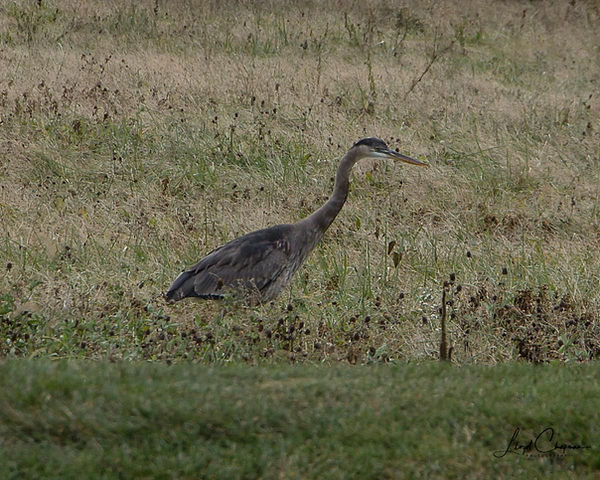
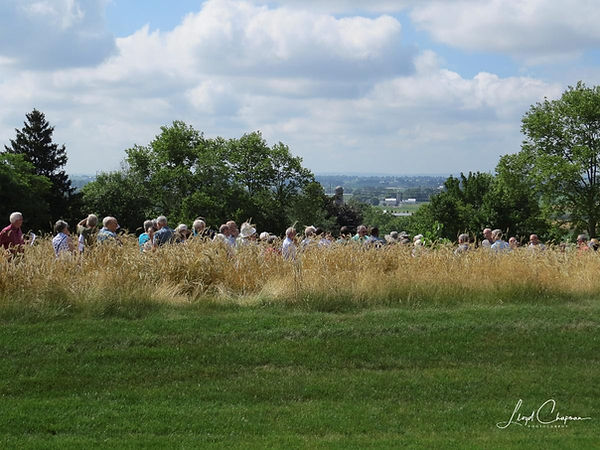
The 25 June worship service on the theme Holy Creatures: Loving our Wild Neighbors was held outdoors in the AMC Grove. The service included a walk through the Nature Preserve with pauses for singing, reading Scripture, and reflections. Because the service was outdoors, we could not offer Zoom participation. The reflections shared by John Weber, Andrew Adams, and Nelson Weber during the Nature Preserve walk, along with the photos taken by Lloyd Chapman, are included here for you to enjoy.

So why rye?
Looking around on both sides of the mulched paths where you’re walking, the nature preserve is totally covered by tall rye grass nearly ripened for harvest. The tall grass hides the plastic tubes protecting the variety of native seedlings volunteers planted last fall. Looking more closely, notice the stand of clover on the ground that was sowed with the rye.
The rye is a widely used grain that quickly germinates in many types of soil to provide immediate groundcover in exposed soil to reduce the runoff and prevent erosion. Additionally, the rye if allowed to stand will weaken, rot and fall to the ground and provide organic matter for the soil. A portion of the rye seeds that lay on the ground will germinate and emerge again next spring, but after a year or two will disappear entirely and the clover will hopefully cover the ground among the trees. So, in a few years as the trees grow, the clover continues serving as the tree floor and its blossoms provide food for pollinators.
The area in the preserve without trees also contains rye but this area was sowed with native grasses and wild flowers to serve as groundcover for the area. Depending on soil conditions and rainfall amounts, some of the native grasses and wildflowers will need to be reseeded to result in healthy stand of grass and flowers.
Keep in mind establishing a nature preserve takes a number of years and may need to go through several stages to reach maturity, fully function and bring beauty.
John Weber

Tree species list and tree care notes
-
18 species (1 shrub, 7 small trees, rest large trees)
-
All native!
-
Chosen for a good mix of attributes (speed of growth, support pollinators, provide habitat, provide fall color, etc).
-
Plan to add informational signs as the trees begin to grow and leaf out. Have a look down a tube!
-
Socks over tubes are to prevent birds falling into tubes, will be removed as trees reach tops of tubes; tubes and socks are not yet bio-degradable; research in progress to develop bio-degradable version, but they have to retain strengthen for up to 5 years.
-
Care of trees: check stakes remain firm, re-attach tubes to stakes, lift stakes to weed around based of tree, remove any invasive species popping up in or around tubes.
Andrew Adams

Birds at AMC
“But ask the animals what they think – let them teach you;
let the birds tell you what’s going on.
Put your ear to the earth – learn the basics.
Listen – the fish in the ocean will tell you their stories.
Isn’t it clear that they all know and agree that God is sovereign,
that he holds all things in his hand –
every living soul, yes, every breathing creature?”
Job 12:7-10 The Message
Two weeks ago, some of us birded on the AMC property for several hours before the morning service. Most of the birds identified were common birds that you would likely be able to identify outside your own homes.
How might the bird species we see here change as the flowers and grasses grow in the meadow, and the trees begin to mature? We can expect goldfinches to be regular visitors when flower seeds ripen in the meadow. Song sparrows will become more common. If we are fortunate, field sparrows, savannah sparrows, and grasshopper sparrows could become part of our landscape. Kestrels and owls may hunt here for small rodents to feed their young. As the trees spread their branches, and the nut trees begin to produce, flocks of blue jays will compete with the squirrels for hickories and walnuts. Chickadees, titmice, nuthatches, and woodpeckers will find food. Hopefully orioles will build their swaying nest in a sycamore tree. Because our tiny forest is so near to both the MCC natural area, and to the Lloyd Roland Memorial Park, our chances of interesting birds finding this spot are greatly increased. What might the birds of the air teach us?
Nelson Weber